





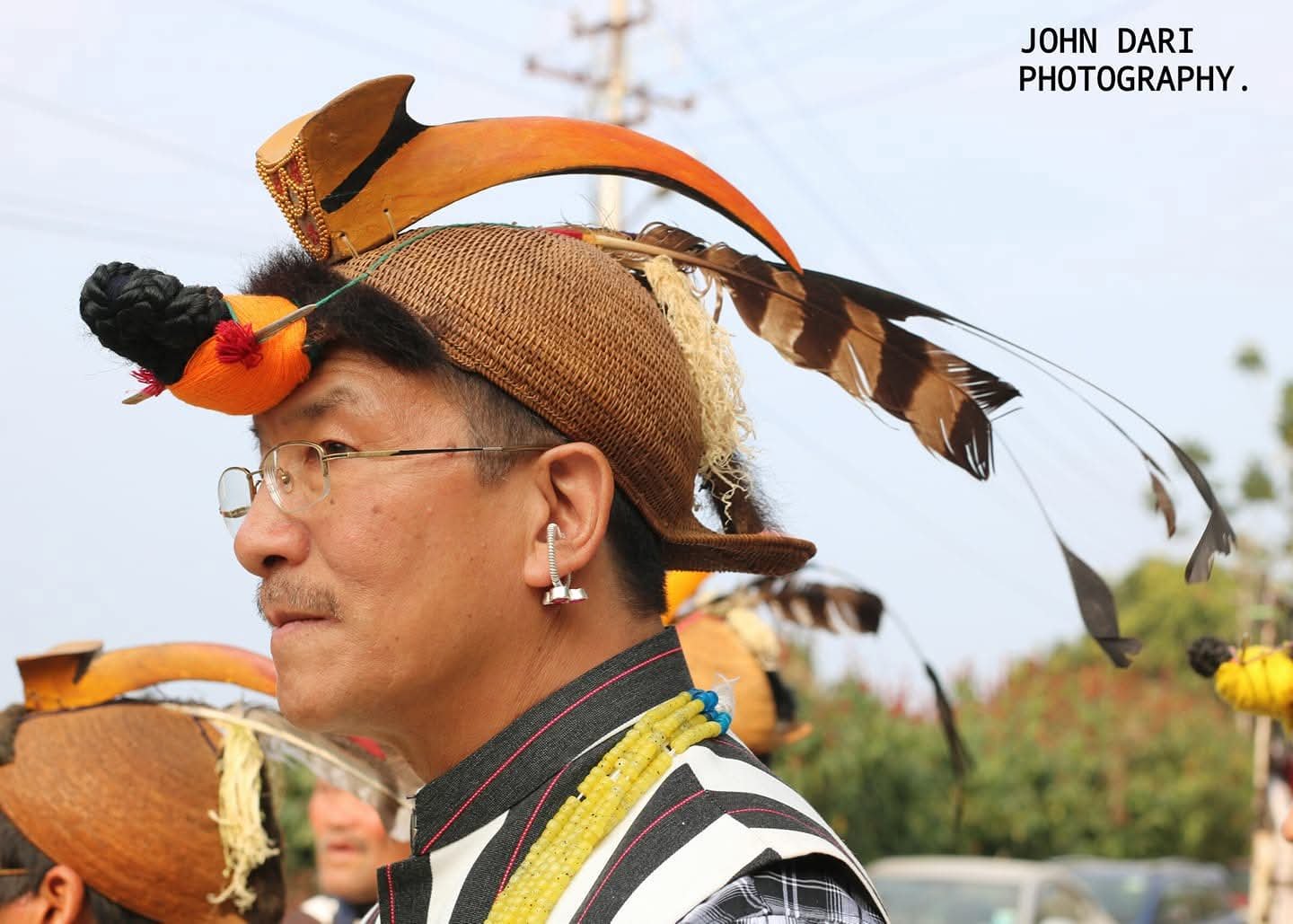
To an outsider observing a Nyishi gathering in Arunachal Pradesh, the Byopa (or Podum) immediately commands attention. Woven intricately from cane, this distinct headgear is often viewed through the lens of traditional fashion or ceremonial attire. Yet, within Nyishi worldview, reducing the Byopa to an ornament misses its essence entirely. It is a living artifact of ancestral survival, botanical spirituality, and oral history stretching back to the time of Abo Tani.
The Fractured Bond of Niya and Nima
The cultural memory of the headgear is anchored in a foundational narrative: the shared lineage and tragic feud between man and beast.
According to oral tradition, Niya (man) and Nima (tiger) were blood brothers. A betrayal of a sacred promise severed their kinship, turning brotherhood into blood feud. When Nima transformed into a tiger, he issued a calculated warning: he would attack Niya from above, striking directly at his head.
Vulnerable to an apex predator targeting him from the canopy, Niya turned to traditional divination and spiritual counsel.
He first sought out Ato Sw, the forest deity, who directed him to Ato Doha Pada—the original custodian and first wearer of the Byopa. Through omen testing with the omniscient deities, Domang Dorang Gv Chajang Ane, Niya received explicit instructions: harvest the Kikdo/Takik Asso cane from Hingteyrang Gv Namchang, a dwelling revered for its spiritually charged flora, and weave it into a protective dome for his head.
When the ambush came, the blow landed squarely on the cane helmet. The sacred fibers absorbed the tiger’s strike, giving Niya the split second needed to retaliate with his bow, striking Nima fatally at the Kungrung Barkap (scapula).
Sacred Ecology and Craftsmanship
The myth reveals a core tenet of indigenous knowledge: physical protection cannot be separated from ecological spirituality. The cane used for a authentic Byopa is not chosen merely for tensile strength or flexibility. It is harvested from specific forest realms believed to imbue the material with vitality and divine defense.
Every stage of crafting the Byopa reflects this relationship between the artisan, the forest ecosystem, and ancestral custom. The tightly coiled cane forms a lightweight yet resilient shield, turning local botany into durable armor.
A Living Emblem of Nyishi Identity
Over generations, an instrument born of mythological combat evolved into the defining visual identity of Nyishi men. Today, the Byopa is worn during major rites of passage, community councils, and festivals like Nyokum Yullo.
In a modern world where indigenous attire is frequently flattened into festival costumes, the Byopa stands as a reminder of what material heritage actually represents. Preserving it is not merely about keeping a weaving technique alive; it is about keeping intact the philosophy, ancestral memory, and ecological stewardship of the Nyishi people.