





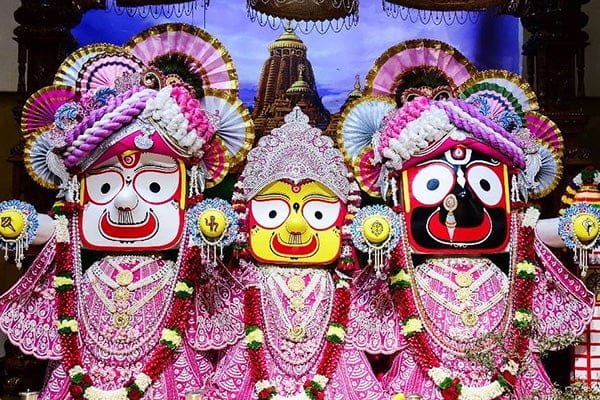
Among the countless temples of India, the idols of Lord Jagannath, Balabhadra, and Subhadra in Puri stand apart for one remarkable reason—they are made of wood instead of stone or metal. This unique tradition has fascinated devotees, historians, and researchers for centuries. What is the secret behind these wooden idols?
A Living Tradition Unlike Any Other
Most Hindu temples install stone idols that remain unchanged for centuries. In contrast, the idols of Lord Jagannath are carved from sacred neem wood, known as Daru. Over time, the wooden idols naturally deteriorate and are ceremonially replaced in a sacred ritual called Nabakalebara, usually every 12 to 19 years, depending on specific astronomical alignments.
The old idols are not discarded. Instead, a deeply sacred and secret ritual transfers the divine essence—traditionally referred to as the Brahma Padartha—from the old idols to the new ones. The exact nature of this sacred element remains one of the greatest mysteries of the Jagannath tradition.
The Philosophy of Life and Death
The wooden idols symbolize an important philosophical idea: the body is temporary, but the soul is eternal. Just as humans are born, grow old, and die, the idols also undergo renewal while preserving the eternal divine presence.
This concept makes Jagannath worship unique among major Hindu traditions.
Indigenous Roots of the Tradition
Many historians and anthropologists believe the Jagannath tradition has deep connections with the indigenous communities of eastern India, particularly the Sabara (Sora) people. These communities traditionally worshipped sacred wooden objects and tree spirits long before the rise of the medieval Jagannath cult.
Several scholars argue that the Jagannath tradition represents a remarkable synthesis of indigenous beliefs and later Vaishnava traditions. While this interpretation is widely discussed in academic research, it is not universally accepted, and religious traditions explain the practice through sacred scriptures and divine command.
Why Neem Wood?
Not every neem tree can become Lord Jagannath.
During the Nabakalebara ceremony, temple priests undertake the Banajaga Yatra, a sacred search for specially marked neem trees. According to tradition, the selected trees must possess specific characteristics and auspicious symbols. Only after elaborate rituals are they cut and transported to the temple for carving.
The Mystery Continues
Another intriguing aspect is that the idols are intentionally unfinished in appearance. Lord Jagannath’s large circular eyes, short arms, and distinctive form differ greatly from conventional Hindu iconography. Scholars have proposed many explanations, but no single theory has been universally accepted.
The rituals surrounding the transfer of the sacred essence are performed in complete secrecy. Even today, only a handful of designated temple priests participate, and the details remain closely guarded.
Faith, History, and Culture
The wooden idols of Jagannath are more than religious icons. They embody centuries of faith, philosophy, indigenous heritage, craftsmanship, and ritual continuity. Whether viewed through the lens of devotion or historical inquiry, they remain one of India’s most extraordinary cultural traditions.
Perhaps that is the greatest secret behind the wooden Jagannath—not merely that the deity is carved from wood, but that the tradition reflects the belief that while the physical form changes, the divine remains eternal.