






Thirty years have passed since the disappearance of Kalpana Chakma, one of Bangladesh’s most prominent Indigenous women’s rights activists. Yet her fate remains unknown, and her case continues to symbolize the struggle for justice, accountability, and the rights of Indigenous peoples in the Chittagong Hill Tracts (CHT).
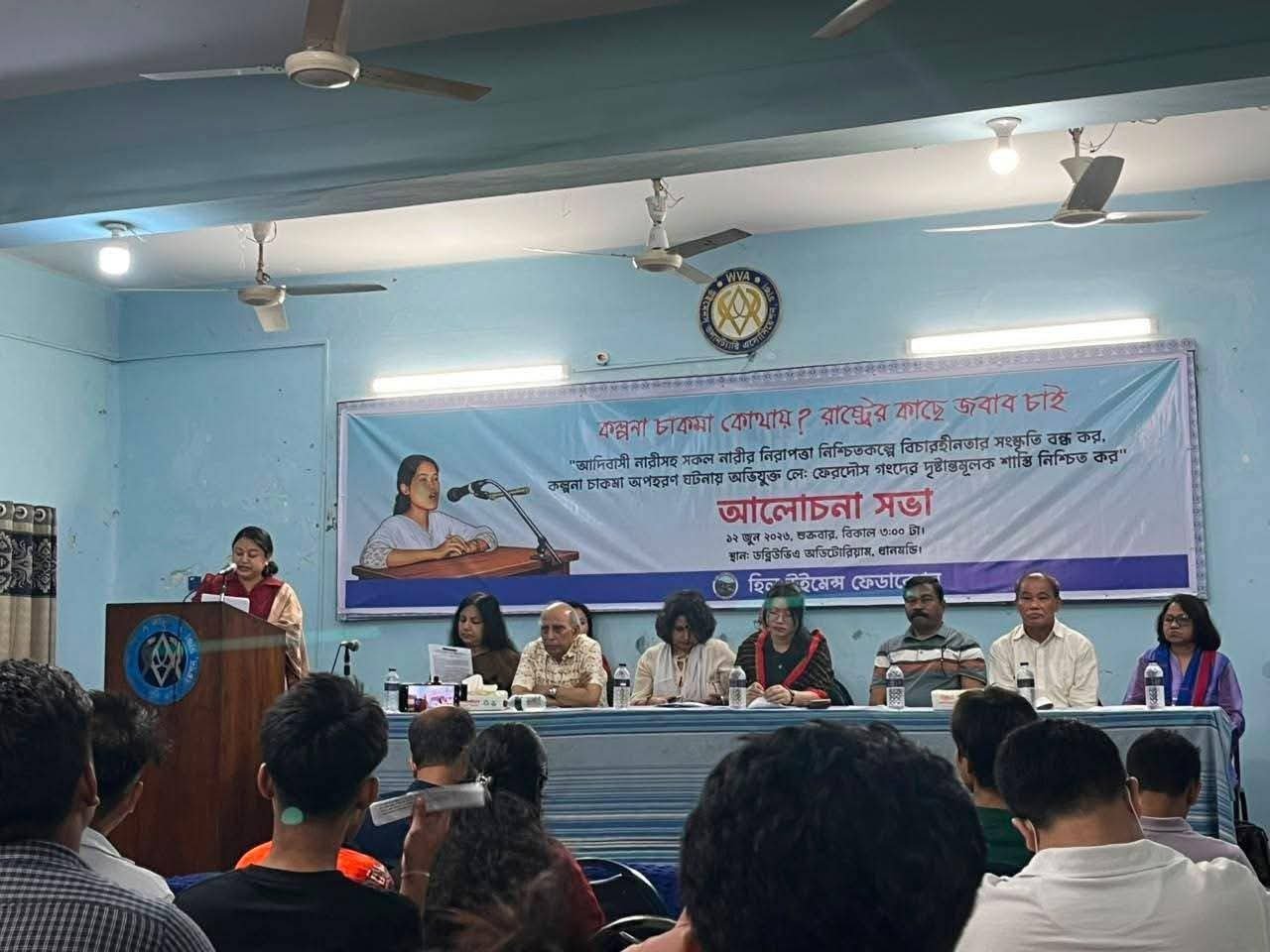
On June 12, 2026, Indigenous organizations, human rights defenders, academics, and civil society representatives gathered at the WVA Auditorium in Dhanmondi, Dhaka, to commemorate the 30th anniversary of her abduction. The meeting renewed long-standing calls for an impartial investigation and accountability in a case that has remained unresolved for three decades.
Who Was Kalpana Chakma?
Kalpana Chakma was an Indigenous rights activist from the Chakma community in Bangladesh’s Chittagong Hill Tracts. She was widely known for her advocacy for Indigenous land rights, women’s rights, and the protection of the cultural and political rights of Indigenous peoples.
As the Organizing Secretary of the Hill Women’s Federation, Kalpana worked closely with Indigenous women affected by conflict, displacement, militarization, and land disputes in the CHT. Her activism made her one of the most recognized Indigenous voices in Bangladesh during the 1990s.
She campaigned for the recognition of Indigenous identity, equal rights, and greater protection for women living in the hill districts at a time when the region was experiencing prolonged political tensions and armed conflict.
The Abduction That Shocked Bangladesh
In the early hours of June 12, 1996, Kalpana Chakma was reportedly abducted from her home in the Rangamati district of the Chittagong Hill Tracts.
Allegations surrounding the incident were directed at then-military officer Lt. Ferdous and several others. Although investigations were initiated and public attention remained high, no one has ever been convicted, and Kalpana Chakma has never been found.
Her disappearance has since become one of Bangladesh’s most widely discussed unresolved human rights cases and has been repeatedly raised by Indigenous organizations, national human rights groups, and international observers.
Thirty Years Later: Justice Still Delayed
Marking the 30th anniversary of her disappearance, the Hill Women’s Federation organized a public discussion in Dhaka under the leadership of its Central President, Shanti Devi Tanchangya. The programme brought together representatives from Indigenous organizations, women’s rights groups, academics, lawyers, and civil society.
In her welcome remarks, Chandrika Chakma, Information, Publicity and Publication Secretary of the Hill Women’s Federation, highlighted Kalpana Chakma’s lasting contribution to the Indigenous rights movement and stressed that justice remains elusive after three decades.
Speakers described Kalpana’s disappearance as one of the most significant unresolved human rights cases in Bangladesh. They expressed concern over what they described as a continuing culture of impunity and argued that the failure to resolve the case undermines confidence in justice and accountability.
Among those addressing the gathering were representatives from the Parbatya Chattagram Mahila Samiti, Bangladesh Indigenous Women Network, Bangladesh Mahila Parishad, Bangladesh Indigenous Forum, Bangladesh Nari Progati Sangha, the Communist Party of Bangladesh, ALRD, and academic institutions.
Beyond One Case
Participants emphasized that Kalpana Chakma’s disappearance is not only about one missing activist but also reflects broader concerns regarding the safety of Indigenous women, protection of human rights, access to justice, and the political situation in the Chittagong Hill Tracts.
The discussion also revisited the implementation of the Chittagong Hill Tracts Accord, with speakers urging the government to accelerate efforts to resolve long-standing issues affecting Indigenous communities.
Renewed Demands
At the conclusion of the programme, participants called for:
- A high-level, impartial investigation into Kalpana Chakma’s abduction.
- Legal action against those accused in the case.
- Greater protection for Indigenous women and human rights defenders.
- A time-bound roadmap for the full implementation of the Chittagong Hill Tracts Accord.
A Symbol of an Unfinished Struggle
For many Indigenous communities in Bangladesh, Kalpana Chakma represents more than an activist who disappeared thirty years ago. She has become a symbol of the ongoing struggle for justice, Indigenous rights, gender equality, and accountability.
Three decades later, her family still awaits answers, activists continue to demand justice, and her disappearance remains one of the country’s most enduring unresolved human rights cases. Until her fate is established and accountability is achieved, Kalpana Chakma’s story continues to resonate as a reminder of the unfinished quest for justice in the Chittagong Hill Tracts.