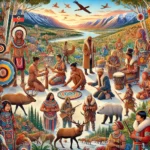




Every year on December 31, while much of the world prepares to welcome the New Year with celebration and festivity, Indigenous communities of Arunachal Pradesh and Northeast India observe Donyi Polo Day with reflection, prayer, and cultural pride. For followers of the Donyi Polo faith, this day is not about ending a year, but about renewing moral commitments under the eternal witness of the Sun and the Moon.
Donyi Polo Day is a powerful reminder that Indigenous belief systems are not relics of the past, but living philosophies rooted in truth, ecological balance, and social ethics.
Meaning of Donyi Polo
The phrase Donyi Polo combines two cosmic forces:
Donyi (Sun) – symbol of truth, clarity, life, and justice
Polo (Moon) – symbol of continuity, balance, and moral witness
Together, they represent the cosmic order that governs human behavior. In Donyi Polo belief, the Sun and Moon do not demand worship; rather, they observe human actions, ensuring accountability and ethical living.
This worldview encourages individuals to live truthfully, knowing that nothing escapes the gaze of Donyi and Polo.
Historical Context of Donyi Polo Day (December 31)
The observance of Donyi Polo Day on December 31 emerged in the late 20th century as part of an organized effort to revive, preserve, and formalize Indigenous belief systems.
With the formation of institutions like the Donyi Polo Yelam Kebang (DPYK), Indigenous leaders sought to create a common platform for spiritual expression and cultural unity. December 31 was chosen symbolically:
It marks a transition, aligning with reflection and moral evaluation
It counters dominant New Year narratives with Indigenous introspection
It reinforces continuity rather than closure
Donyi Polo Day thus reclaims December 31 as a day of Indigenous philosophical renewal.
Donyi Polo as an Indigenous Religion
Donyi Polo challenges mainstream definitions of religion. It does not rely on:
A single prophet
A written scripture
A centralized religious authority
Instead, it is sustained through oral traditions, rituals, community ethics, and ancestral memory.
Practiced by Indigenous groups such as the Adi, Galo, Nyishi, Apatani, Tagin, and other Tani communities, Donyi Polo predates colonial and modern religious systems in the region.
Donyi Polo Day strengthens the assertion that Indigenous religions are complete knowledge systems, not incomplete traditions awaiting “reform” or replacement.
Rituals and Observances on December 31
Donyi Polo Day is marked by simplicity and collective participation.
Common Practices Include:
Community prayers at Donyi Polo centers
Invocation of Donyi and Polo for truth and righteousness
Ethical pledges by individuals and youth
Traditional songs, chants, and dances
Public discussions on Indigenous philosophy
Cultural exhibitions and storytelling
Rather than elaborate rituals, the focus remains on moral renewal, community harmony, and cultural education.
Ethics and Moral Philosophy
At its core, Donyi Polo teaches that morality is not enforced by fear of punishment, but by cosmic accountability.
Key ethical values include:
– Honesty and truthfulness
– Respect for elders and ancestors
– Social responsibility
– Harmony within the community
– Balance with nature
Donyi Polo Day becomes an annual moment of self-evaluation, where individuals reflect on whether their actions align with these values.
Ecological Worldview of Donyi Polo
Donyi Polo is deeply ecological in nature. Forests, rivers, mountains, animals, and celestial bodies are not “resources” but co-existing entities.
– Traditional taboos and customs regulate:
– Hunting seasons
– Forest use
– Agricultural practices
These were early forms of Indigenous environmental governance. In the context of climate change, Donyi Polo philosophy offers a sustainable alternative to extractive development models.
Donyi Polo Day and Indigenous Resistance
Donyi Polo Day also carries a political and cultural significance. It stands as a peaceful assertion against:
– Religious homogenization
– Cultural erasure
– Forced or inducive conversions
– Misrepresentation of Indigenous faiths
By observing December 31 as Donyi Polo Day, Indigenous communities reclaim their right to define spirituality on their own terms.
Youth, Modernity, and Continuity
Modern education, urban migration, and digital culture pose challenges to Indigenous belief systems. Recognizing this, Donyi Polo Day increasingly emphasizes:
– Youth participation
– Documentation of oral traditions
– Indigenous language use
– Cultural literacy
The challenge lies in adapting to modern realities without turning Donyi Polo into an institutionalized replica of organized religions.
Global Indigenous Connections
Donyi Polo shares philosophical similarities with Indigenous belief systems worldwide:
Sun–Moon cosmologies of Native American nations
African ancestral belief systems
Aboriginal Australian cosmology
Donyi Polo Day thus connects local Indigenous identity to a global Indigenous worldview grounded in ethics and ecology.
Recognition and the Road Ahead
Despite constitutional guarantees, Indigenous religions often lack formal recognition in official data systems.
Donyi Polo Day strengthens demands for:
Separate recognition of Indigenous religions
Educational inclusion of Indigenous philosophy
Legal protection of customary practices
Cultural respect and autonomy
Recognition is not about numbers—it is about existence and dignity.
Celebrated on December 31, Donyi Polo Day transforms a globally commercialized date into a moment of Indigenous reflection and renewal.
Under the eternal witness of Donyi (Sun) and Polo (Moon), followers reaffirm their commitment to truth, justice, community, and ecological balance.
In a world searching for ethical and environmental solutions, Donyi Polo is not merely an Indigenous faith—it is a philosophy humanity can learn from.
Donyi Polo Day: An Indigenous Assertion of Faith, Ethics, and Ecological Wisdom