






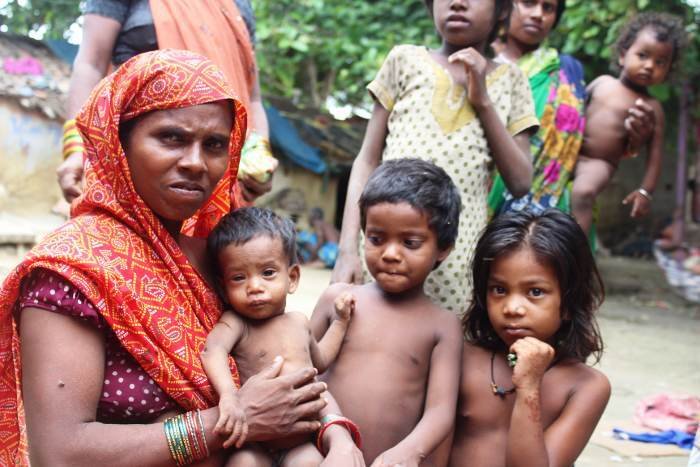
A stark picture of malnutrition in India’s tribal regions emerged in the Lok Sabha today as government data revealed that one in every three children enrolled in Anganwadi centres is stunted, underscoring a deep nutrition crisis despite years of intervention. The finding surfaced during a discussion on infant malnutrition raised by Prof. Sougata Ray, prompting questions about the government’s preparedness, monitoring, and accountability.
Government Avoids Infant Death Data, Focuses on Schemes
Prof. Ray sought detailed, state-wise numbers of infant deaths due to malnutrition in tribal areas over the last five years. However, the Ministry of Tribal Affairs did not provide any such data. Instead, the response focused extensively on ongoing programmes under Mission Saksham Anganwadi and Poshan 2.0, redirecting attention away from mortality and toward scheme implementation.
This omission has raised concerns among experts, who say that without transparent death figures, the actual scale of tribal malnutrition remains unclear.
33% of Monitored Children Found Stunted
According to the government’s own Poshan Tracker data from October 2025, 33 percent of children under five years of age registered in Anganwadis have been identified as stunted, a direct marker of long-term malnutrition. Alongside this, 14 percent are underweight, and 5 percent are wasted, signaling acute nutritional deprivation.
However, the government also admitted a major monitoring gap: India has an estimated 13.75 crore children under five, but only 6.64 crore are enrolled in Anganwadi centres. Of these, 6.44 crore have been measured for growth. This means that nearly seven crore children are outside the government’s nutrition monitoring system, many of them belonging to remote and vulnerable tribal populations.
Mission Poshan 2.0: Government Lists Reforms
In response to the question, Minister of State for Tribal Affairs Shri Durgadas Uikey highlighted various interventions under Mission Poshan 2.0. The mission merges earlier schemes—Anganwadi Services, Poshan Abhiyaan, and the adolescent girls’ nutrition programme—into a unified national framework.
Key steps highlighted include:
Revised 2023 nutrition norms focusing on diet diversity and quality protein
Distribution of fortified rice to address anaemia
Mandatory use of millets once a week in Anganwadi meals
Adoption of CMAM protocol to manage severe acute malnutrition
Community mobilization drives such as Poshan Maah and Poshan Pakhwada
Upgradation of 2 lakh Anganwadi Centres into “Saksham Anganwadis”
Approval to convert 1,11,363 Mini-AWCs into full-fledged centres
Long-Term Survey Trends Show Improvement—but Not Enough
The government cited National Family Health Survey (NFHS) data to argue that child nutrition indicators have improved over decades. Stunting has fallen from 52 percent in 1992-93 to 35.5 percent in 2019-21, underweight levels from 53.4 percent to 32.1 percent, and wasting from 17.5 percent to 19.3 percent.
Yet, health experts note that national averages often obscure the much harsher reality of tribal belts, where access to food, healthcare, and social services remains limited.
Bombay High Court’s Criticism Looms in Background
Part of Prof. Ray’s question referred to recent remarks by the Bombay High Court, which had sharply criticized governments for their “casual approach” in dealing with tribal malnutrition. The Ministry did not address this directly, but its detailed listing of schemes appeared as an attempt to demonstrate seriousness in tackling the crisis.
Conclusion: A Data Gap That Mirrors the Nutrition Gap
Although the government showcased improvements and highlighted extensive schemes, the stark figure of 33 percent stunting among monitored tribal children raises urgent questions. With millions of tribal children still untracked, nutrition experts warn that India’s malnutrition battle cannot be fully assessed—or won—without transparent data and intensified, targeted action in its most vulnerable regions.