





Mon (Nagaland):
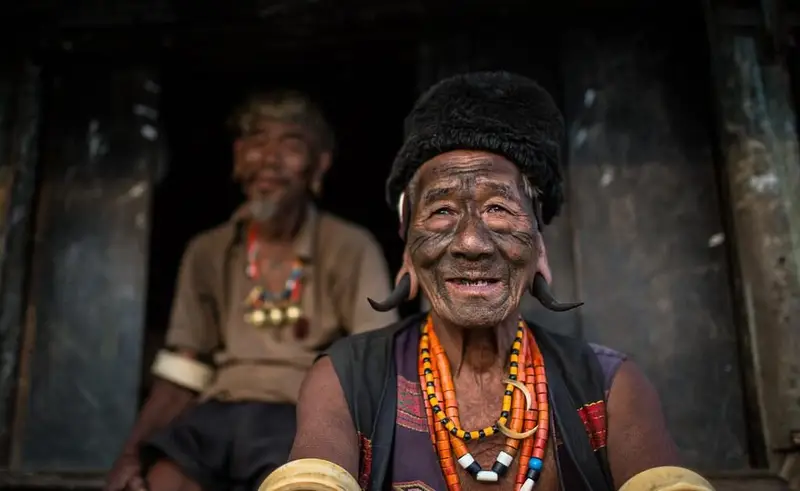
The Konyak Naga tribe of Nagaland’s Mon district is often remembered for a single historical practice—head-hunting. While the tradition has long been abandoned, its continued portrayal without context has contributed to stereotypes that overshadow the community’s cultural depth, social systems, and peaceful present.
Anthropologists and tribal elders assert that head-hunting was not an act of indiscriminate violence but a ritualized wartime practice deeply rooted in spirituality, social structure, and survival in a pre-modern hill society.
A Ritual Practice, Not Random Violence
Historically, head-hunting among the Konyaks occurred during inter-village warfare and was governed by customary rules. The practice was tied to the belief that the human head contained vital spiritual energy, which could ensure agricultural fertility, communal prosperity, and protection from calamities.
Captured heads were placed in morungs—traditional male dormitories—where they were treated as spiritual symbols rather than trophies of cruelty.
Warrior Identity and Social Status
In traditional Konyak society, participation in warfare was linked to masculinity and honor. A man who had taken part in a head-hunting expedition gained social recognition and was eligible for:
Facial and body tattoos
Wearing specific ornaments
Participation in village councils
Facial tattoos, now seen only among elderly men, served as markers of courage and status. The practice of tattooing ended along with head-hunting several decades ago.
Governance and Ethics of Warfare
Village warfare was regulated by the Angh, the hereditary chief, who authorized conflicts and peace settlements. Unauthorized violence was considered a violation of customary law. Women and children were generally excluded from conflict, reflecting the ethical boundaries within which warfare was conducted.
Role of the Morung
The morung functioned as a social institution where young men were trained in discipline, history, oral traditions, and defense. It also served as a cultural archive, preserving war narratives, songs, and rituals that defined community identity.
Women’s Role in the Social Order
While men were warriors, women played key roles in sustaining society. They performed ritual songs, managed agriculture, and conducted fertility rites after wars. Their position as life-givers was culturally acknowledged and respected.
How and Why the Practice Ended
Head-hunting declined during the colonial period following British military interventions in the late 19th century. The spread of Christianity and modern education further transformed social values. After India’s independence, the enforcement of law and integration into state governance led to the complete cessation of head-hunting by the 1960s.
Today, the practice exists only in oral history and cultural memory.
Konyak Society in the Present
Modern Konyak society is largely Christian and actively engaged in education, politics, and cultural preservation. Community museums and festivals now serve as spaces for narrating history responsibly, without glorifying violence.
Local leaders emphasize that portraying head-hunting as a continuing tradition is both inaccurate and harmful.
Reframing the Narrative
Scholars argue that colonial accounts labeled Konyaks as “savage” to justify administrative control, ignoring their legal systems and moral codes. A contextual understanding reveals a society that has successfully transitioned from ritual warfare to peaceful coexistence, without losing cultural identity.
Head-hunting was a historical institution shaped by belief, warfare, and survival—not a defining characteristic of the Konyak people today. As discussions around Indigenous history grow, voices from within the community stress the need for accurate representation rooted in dignity and context.
The story of the Konyak Nagas is not one of violence, but of cultural evolution and resilience.