



Ranchi, Jharkhand:
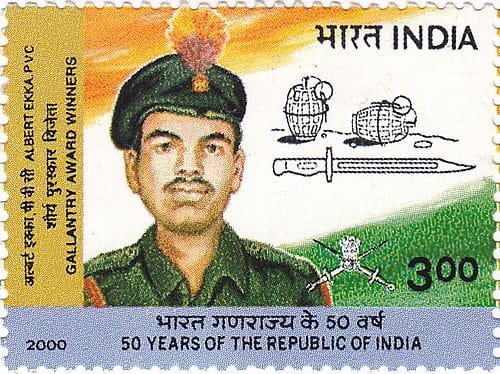
As India marks another year since the decisive 1971 Indo-Pakistan War, the nation remembers Lance Naik Albert Ekka, the Adivasi soldier from Gumla whose extraordinary bravery turned the tide in one of the conflict’s most critical battles. Awarded the Param Vir Chakra (PVC) posthumously, Ekka’s legacy continues to inspire generations across India and Bangladesh.
Early Life in Gumla
Born on 27 December 1942 in Zari village of Chainpur block, Gumla district, Albert Ekka grew up in the Oraon (Kurukh) Adivasi community. Raised in a humble household, Ekka was known for his physical agility, love for nature, and calm temperament — qualities rooted deeply in Adivasi traditions of hunting, tracking, and collective discipline. These traits later shaped him into an exceptional soldier.
Journey to the Indian Army
Ekka joined the Bihar Regiment before being inducted into the elite 14 Guards. Fellow soldiers remember him as a disciplined, sharp-minded and fearless infantryman. His exceptional close-combat instincts and ability to stay composed under pressure earned him great respect within the unit.
The 1971 War and the Battle of Gangasagar
When war broke out in December 1971, Ekka’s battalion was tasked with capturing Gangasagar, a strategically vital position near Agartala. The area was heavily fortified by Pakistani forces, with multiple machine-gun bunkers blocking the Indian advance.
On the night of 3 December 1971, Ekka displayed unparalleled courage. Despite intense enemy fire, he crawled forward and neutralized a key bunker with a grenade and bayonet. As Indian troops moved ahead, another enemy position caused severe casualties. Wounded and bleeding, Ekka pushed himself forward again, destroying the second bunker that had stalled the assault.
His actions ensured the successful capture of Gangasagar, a breakthrough that helped India secure momentum in the eastern theatre. However, Ekka succumbed to his injuries on the battlefield.
Nation’s Highest Honour
For his “conspicuous bravery, determination, and unselfish devotion to duty,” Albert Ekka was posthumously awarded the Param Vir Chakra, India’s highest military honour. His wife, Balamdine Ekka, received the award from the President of India in 1972.
Legacy Across India and Bangladesh
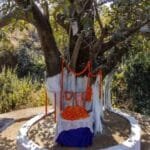
Albert Ekka is commemorated through memorials, institutions, and public spaces. Albert Ekka Chowk in Ranchi stands as a central landmark, and his village Zari has become a place of pride for the Adivasi community. Bangladesh too has honoured Ekka for his pivotal role in its liberation.
For many, his story is a reminder of the significant yet often overlooked contributions of India’s tribal communities to national security. Ekka’s courage symbolizes the deep martial tradition and moral strength that define large sections of Adivasi society.
Inspiration for Future Generations
More than five decades later, Albert Ekka remains a role model for India’s youth. His life continues to be celebrated in schools, military institutions, and Adivasi cultural forums. Historians and defence experts describe him as “a soldier whose instinctive bravery altered the outcome of a war.”
Albert Ekka’s heroism in 1971 is not just a chapter of military history — it is a story of selfless sacrifice and national pride. As India and Bangladesh remember their shared past, the legacy of this Adivasi son of Jharkhand continues to shine as an example of unwavering duty and indomitable courage.