




An Ancient Culinary Ritual from Himachal Pradesh
Nestled in the majestic folds of the Himalayas, where snow-capped peaks watch over terraced fields and ancient temples, there exists a feast that is far more than a meal—it is a ceremony, a communal bond, and a legacy served on leaves. This is Kangdi Dham, the traditional celebratory banquet of Himachal Pradesh, a multi-course vegetarian ritual that has defined weddings, festivals, and gatherings for centuries. More than just food, it is an edible narrative of the mountains, a story of faith, community, and timeless tradition.
The Feast on Leaves: What is Kangdi Dham?
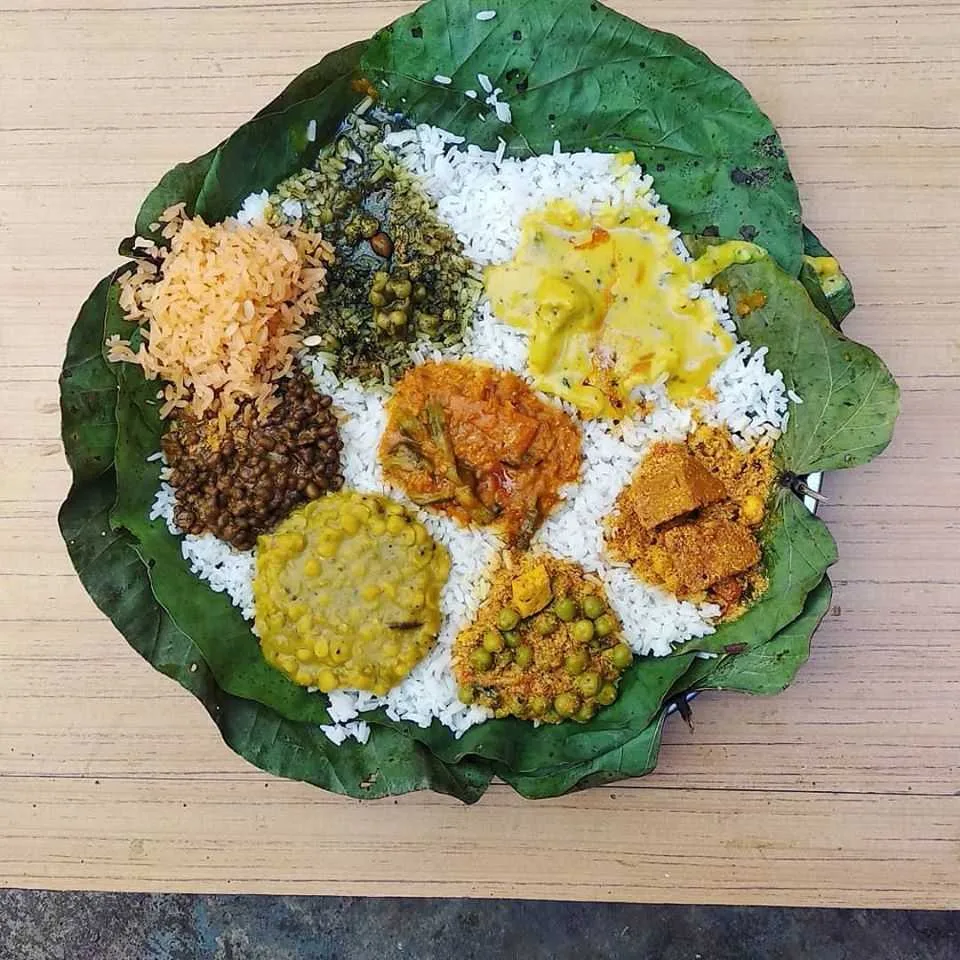
Kangdi Dham is a meticulously sequenced, pure vegetarian (satvik) feast, characterized by one sacred rule: no onion, no garlic. Instead, its rich, comforting flavors are built from yogurt, lentils, kidney beans, chickpeas, rice, and a distinct blend of mountain spices—cardamom, cinnamon, dry ginger, and asafoetida.
Served on a pattal (a plate stitched from dried leaves), the Dham follows a strict, unchangeable order:
- Madra – Chickpeas or rajma in a creamy, yoghurt-based gravy.
- Rajma – Red kidney beans in a thick, spiced curry.
- Kadi – A tangy yogurt curry with soft besan (gram flour) dumplings.
- Khatta – A sweet-and-sour tamarind or dried mango chutney to cleanse the palate.
- Dal – Simple, seasoned lentils.
- Chawal (Bhat) – Steamed rice.
- Meetha (Mittha) – The grand finale: sweet rice cooked with jaggery, ghee, and dry fruits.
The entire experience is communal. Guests sit in rows on the floor (pangat), embodying equality, as servers move down the line, ensuring everyone receives the same dishes in the same sacred sequence.
Guardians of the Flame: The Boti Chefs
The soul of the Dham is guarded by the Boti community, the hereditary Brahmin chefs for whom preparing this feast is a sacred vocation. Their knowledge is an oral treasure, passed from father to son over generations.
The cooking is a spectacle of tradition. Using massive brass vessels over open wood fires, the Botis practice slow cooking that infuses the food with a unique, smoky depth—a flavor profile modern kitchens cannot replicate. Their expertise lies not just in recipes, but in the ritual: knowing the exact order, the precise spice balance, and the reverence required to turn local ingredients into a community’s blessing.
A History Steeped in Temple and Community
The origins of Dham are deeply spiritual. Historians trace it to the tradition of ‘Mahaprasad’—the great food offering in Himalayan temples, particularly in Mandi, Kullu, and Shimla. After being offered to deities like Lord Shiva or local gods, this blessed food was served as a communal meal in temple courtyards, uniting devotees.
Over time, this temple practice was adopted by royal courts and then by the wider community for life’s most significant milestones. The satvik nature of the meal aligned it with purity and piety, making it the feast of choice for:
· Weddings
· Major festivals (like the famous Shivratri fair in Mandi)
· Community gatherings and ancestral ceremonies
To be invited to a Dham was to be welcomed into the heart of the community.
Dham Today: A Living Heritage
In today’s fast-paced world, Kangdi Dham stands as a powerful symbol of cultural resilience and identity.
· The Ultimate Celebration: No grand Himachali wedding is considered complete without it. It is the community’s collective blessing on a new family.
· A Cultural Anchor: It promotes and preserves local agriculture—Himachali rajma, red rice, and native spices.
· Beyond Borders: While deeply local, its fame has spread. Food festivals and cultural events across India now feature Dham, introducing this Himalayan treasure to a wider audience.
More Than a Meal, a Memory
Kangdi Dham is a living heirloom. It is the taste of the Himalayas—of pine-scented air, ancient rituals, and warm hospitality. To sit on the floor, leaf plate in hand, and partake in this sequential feast is to connect with a timeless rhythm. It is a reminder that in Himachal Pradesh, joy is communal, tradition is flavorful, and the most sacred celebrations are, and will always be, served on leaves.