


New Delhi: The question of preserving India’s indigenous and tribal languages once again came to the fore in Parliament, as the Union Government detailed its efforts for safeguarding the tribal languages and dialects of Tripura. In a written reply to an Unstarred Question in the Lok Sabha on December 11, 2025, the Ministry of Tribal Affairs outlined ongoing schemes, institutional mechanisms, financial allocations, and digital initiatives aimed at protecting these languages for future generations.
Why tribal languages matter in Tripura
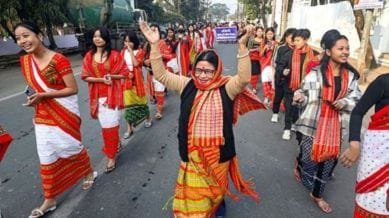
Tripura is home to a rich mosaic of indigenous communities, with languages such as Kokborok (Tripuri), Reang, Halam, Chakma, Mogh, Darlong, Ranglong, and Uchai forming the backbone of tribal identity, oral traditions, folklore, and cultural memory. Many of these languages, however, face pressures from declining intergenerational transmission, limited institutional use, and lack of adequate funding.
Government’s main institutional support: Tribal Research Institutes
The Ministry of Tribal Affairs stated that language preservation is primarily supported through the Centrally Sponsored Scheme ‘Support to Tribal Research Institutes (TRIs)’. Under this scheme, financial assistance is provided to 29 TRIs across the country, including the Tribal Research and Cultural Institute (TR&CI), Tripura, which functions under the administrative control of the State Government.
Through this mechanism, the Centre supports projects focused on:
- Documentation and research on tribal languages and dialects
- Capacity building and training programmes
- Organisation of tribal festivals, cultural events, and exchange visits
- Preservation and dissemination of cultural practices, rituals, and oral traditions
What kind of language work is being done?
According to the government reply, several concrete language-focused activities are being undertaken under the TRI framework:
- Bilingual dictionaries and trilingual proficiency modules in tribal languages
- Primers for Classes I to III under the Multi-Lingual Education (MLE) initiative, aligned with the National Education Policy (NEP) 2020
- Publication of Varnmala, local rhymes, stories, and children’s literature in tribal languages
- Publishing books and journals to promote tribal literature
- Documentation of folklore, folktales, oral literature, songs, riddles, and ballads
- Translation of health awareness materials, including modules on Sickle Cell Anaemia, into local tribal dialects
- Organisation of seminars, workshops, conferences, and poetic symposiums
Specific initiatives in Tripura
The TR&CI, Tripura has implemented several state-level initiatives aimed specifically at preserving indigenous tribal languages:
- Publication of books on learning tribal languages of Tripura and preparation of dictionaries
- Annual publication of a literary journal titled “SAIMA” in tribal languages
- Biannual publication of a research journal titled “TUI”
- Seminars and workshops on indigenous tribal languages in collaboration with Tripura University, with research papers documented and published
- Audio-visual documentation of tribal heritage and community life in local languages
- Preparation of musical notation for tribal folk songs
- Introduction of tribal language primers in government-run schools
The Ministry informed that these books, primers, and digital materials are preserved in the Social Science Library of TR&CI and made publicly accessible through institutional websites and online platforms.
Funding reality: modest and uneven
While outlining multiple initiatives, the government also disclosed the financial allocation for language preservation in Tripura over the last five years, which reveals a limited and uneven funding pattern:
- 2020–21: ₹0.00 lakh
- 2021–22: ₹5.00 lakh
- 2022–23: ₹0.00 lakh
- 2023–24: ₹0.00 lakh
- 2024–25: ₹8.00 lakh
In total, only ₹13 lakh was allocated over five years. The Ministry said the funds were utilised for collecting writings from eminent tribal authors, printing and publishing books, and organising seminars and workshops in collaboration with Tripura University.
For language activists and scholars, this raises an important question: can such limited funding meaningfully address the long-term survival and everyday use of indigenous languages?
Role of education and national institutions
Beyond the Ministry of Tribal Affairs, the Ministry of Education plays a key role through the Scheme for Protection and Preservation of Endangered Languages (SPPEL), implemented by the Central Institute of Indian Languages (CIIL), Mysuru. Under SPPEL, 117 endangered languages have been identified nationwide, including Darlong, Ranglong, and Uchai from Tripura.
SPPEL focuses on:
- Language documentation and cultural profiling
- Development of primers and bi/trilingual dictionaries
- Preparation of grammatical sketches and pictorial glossaries
Notably, local community members are directly involved as language consultants and participants in workshops and documentation processes.
Digital preservation: archives and portals
The government highlighted several digital initiatives aimed at long-term language preservation:
- Bhasha Sanchika, a digital language repository by CIIL, offering text, audio, video, and image-based linguistic resources
- Bharatavani Project, under the Digital India initiative, providing knowledge resources in 121 Indian languages
On Bharatavani, tribal languages spoken in Tripura—Kokborok, Halam, Mogh, and Chakma—are represented through:
- Language learning materials
- Textbooks
- Encyclopaedic content
- PDF dictionaries
Additionally, the Linguistic Data Consortium for Indian Languages (LDC-IL) has developed a Mother Tongue Parallel Text Corpus of India, which includes tribal languages of Tripura such as Kokborok and Reang, documenting tens of thousands of words in structured grammatical formats.
Schemes vs reality
On paper, the government’s response presents a wide network of schemes, institutions, and digital platforms aimed at preserving tribal languages. However, the funding figures and reliance on project-based interventions point to a deeper challenge: preservation without strong everyday institutional use—in schools, administration, media, and public life—may not be enough to ensure language survival.
The Lok Sabha reply, while highlighting existing efforts, also indirectly underscores the gap between policy intent and ground-level investment, a gap that continues to shape the future of Tripura’s indigenous tribal languages.