







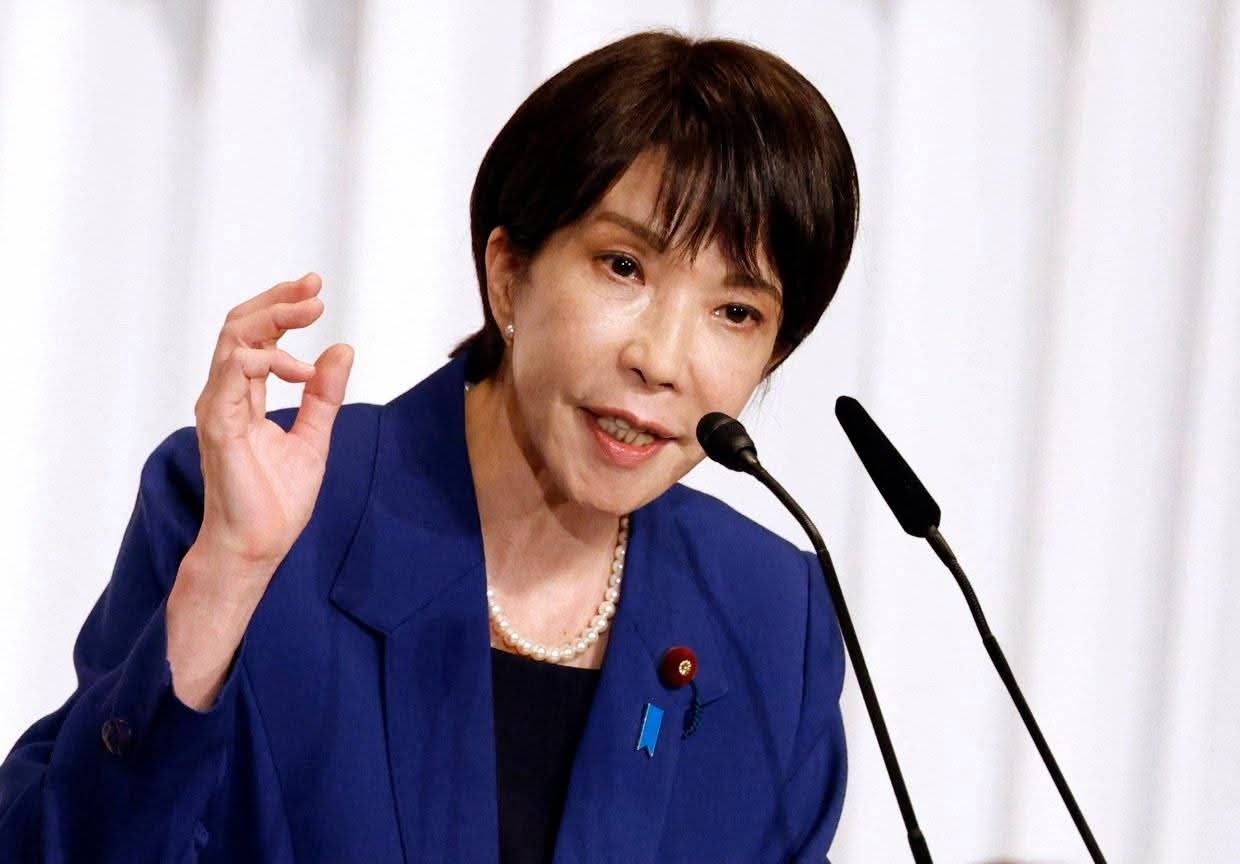
Tokyo, October 21, 2025 — In a landmark moment for Japan’s political history, Sanae Takaichi has been elected as the country’s first female prime minister. The 64-year-old leader of the ruling Liberal Democratic Party (LDP) secured victory in a parliamentary vote, breaking a barrier in a nation long dominated by male political figures.
Takaichi won 237 votes in the lower house — just four above the majority required — and was later confirmed by the upper house, officially succeeding outgoing Prime Minister Shigeru Ishiba. Her election comes after the LDP formed a new coalition with the right-leaning Japan Innovation Party (Ishin), following the departure of its previous partner, Komeito.
A Long Journey to the Top
Sanae Takaichi’s rise marks the culmination of decades in politics. Born in Nara Prefecture, she first entered the Diet in 1993 and gradually built her reputation as a fierce conservative voice within the LDP. Over the years, she held key cabinet positions, including Minister of Internal Affairs and Communications, and gained attention for her hawkish views on national security.
Her victory in the LDP leadership race earlier this month — defeating Agriculture Minister Shinjiro Koizumi in a runoff — paved the way for her ascent to the premiership. With this, Japan joins the ranks of countries like India, the UK, and Germany that have seen women rise to their highest political office.
Policy Vision and Ideological Stance
While Takaichi’s election symbolizes progress for women’s representation, her policies reflect Japan’s conservative establishment. She is known for advocating a stronger defense policy, revising Japan’s pacifist constitution, and strengthening ties with the United States amid regional security concerns over China and North Korea.
On domestic issues, Takaichi has pledged to revive Japan’s sluggish economy by investing in cybersecurity, energy independence, and technological innovation. However, critics argue her social policies remain deeply traditional. She has opposed same-sex marriage, separate surnames for married couples, and female succession to the Imperial throne — positions that contrast with her groundbreaking personal achievement.
Her newly announced cabinet includes only three women, reflecting a continuation of Japan’s slow progress toward gender equality in governance.
Challenges Ahead
Takaichi’s government faces an uphill battle. The LDP–Ishin coalition currently holds a minority in both houses, making it difficult to pass major legislation without bipartisan support. Economically, Japan continues to struggle with high inflation, an aging population, and stagnant growth, while geopolitical tensions in East Asia demand a delicate diplomatic balance.
Foreign policy experts also warn that her past visits to the controversial Yasukuni Shrine, which honors Japan’s war dead — including convicted war criminals — could strain relations with China and South Korea.
A Symbolic Shift, Not a Revolution
Despite her conservative platform, Takaichi’s election represents a major symbolic shift for Japan — a society still grappling with deep gender gaps. The country ranks low on global gender equality indexes, and women hold fewer than 15% of seats in parliament.
For many Japanese women, her rise offers a moment of pride and possibility, even if her policies do not necessarily advance feminist goals. As political analyst Keiko Ishiyama noted, “Her leadership is both a breakthrough and a paradox — a woman leading a system still resistant to change.”
The Road Ahead
As Japan’s first female prime minister, Takaichi faces immense pressure to balance her conservative base with calls for reform. Her leadership will be judged not just by her symbolic victory but by whether she can navigate Japan through economic stagnation, demographic decline, and shifting global power dynamics.
Her premiership begins with both historic hope and ideological caution — a reminder that breaking a glass ceiling does not always mean breaking tradition.