





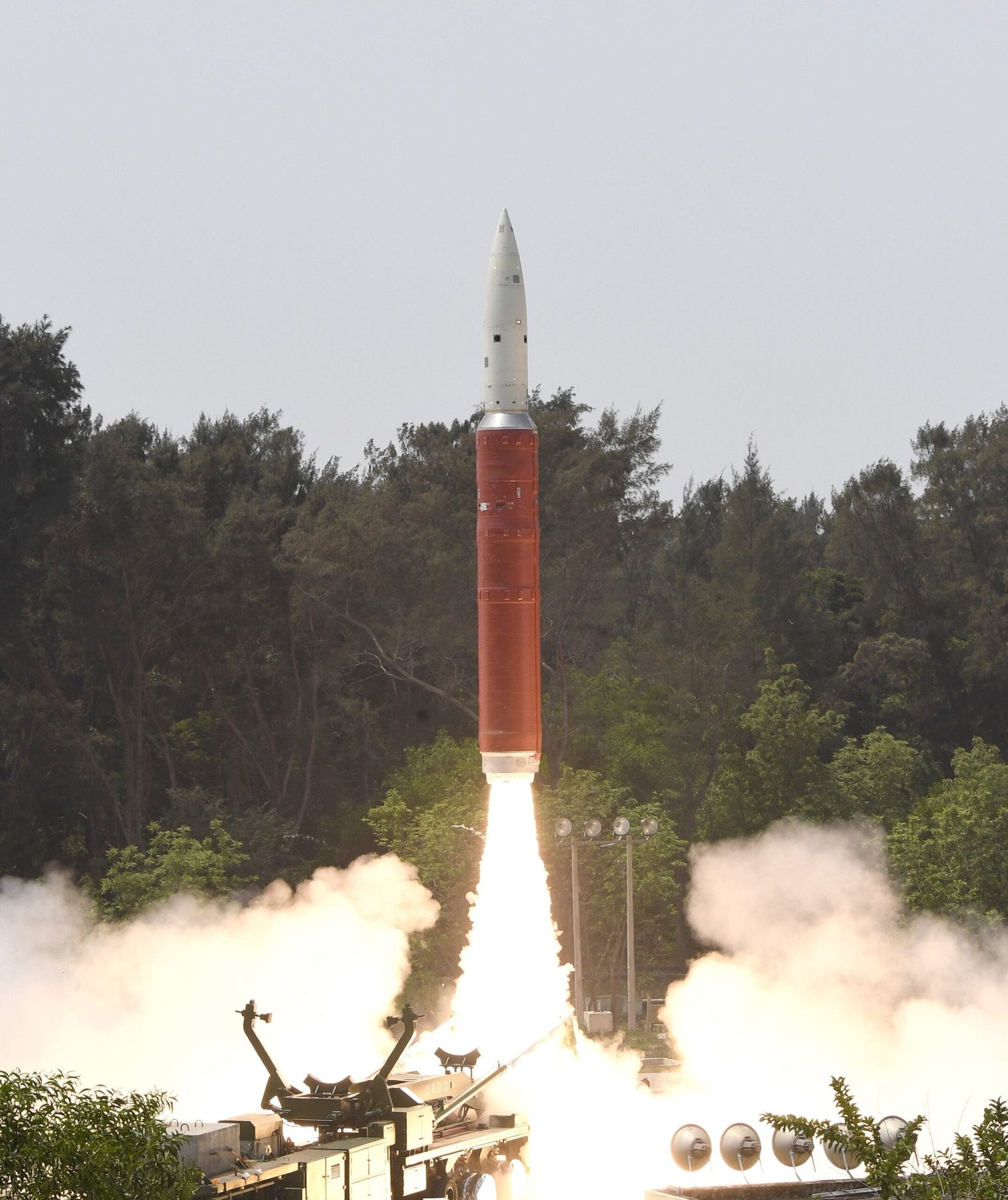
In the 21st century, space has become a crucial domain of strategic competition. Satellites support communication, navigation, weather forecasting, surveillance, banking networks, and modern military systems. Because of this dependence, many countries have developed Anti-Satellite (ASAT) weapons—systems designed to disable or destroy satellites in orbit.
Among the emerging space powers, India and China have both demonstrated the ability to target satellites in space. Their capabilities reflect not only technological advancement but also broader geopolitical competition in Asia.
The Strategic Importance of Satellites
Satellites are the backbone of modern infrastructure. Navigation systems such as Global Positioning System, communication networks, and military surveillance depend on them. In military terms, satellites help in:
- missile guidance
- battlefield communication
- intelligence and reconnaissance
- early warning systems
Because of this, destroying an adversary’s satellites can significantly weaken its military capabilities. This strategic logic has driven several countries to develop ASAT technology.
China’s Early Lead in Anti-Satellite Weapons
China demonstrated its ASAT capability earlier than India and is widely considered to have invested heavily in space warfare technologies.
A major milestone occurred in 2007 Chinese anti-satellite missile test, when China launched a missile that destroyed one of its own weather satellites, Fengyun-1C.
The satellite was orbiting at approximately 865 kilometers above Earth, and the interception produced thousands of pieces of space debris. The test attracted international criticism because the debris created risks for other satellites and space missions.
Despite the criticism, the test demonstrated China’s capability to destroy satellites in high Earth orbit. Since then, analysts believe China has continued to develop multiple forms of ASAT systems, including:
- direct-ascent missiles launched from Earth
- co-orbital satellites capable of approaching and interfering with other spacecraft
- electronic warfare tools to jam satellite signals
- cyber capabilities targeting satellite control systems
These developments indicate that China views space as an important domain of military competition.
India’s Entry into the ASAT Club
India entered the group of ASAT-capable nations in 2019 with a successful test known as Mission Shakti.
The mission was conducted by the Defence Research and Development Organisation, which launched a missile that destroyed an Indian satellite named Microsat-R.
Unlike the Chinese test, India targeted a satellite orbiting at about 300 kilometers altitude, significantly lower than the Chinese test. The lower altitude was chosen intentionally so that most debris would burn up in the atmosphere within a short time.
With this demonstration, India became the fourth country in the world to successfully test an ASAT weapon, after the United States, Russia, and China.
The test signaled India’s growing technological capabilities and its desire to protect its expanding space assets.
Technological Comparison
Although both countries have demonstrated ASAT capabilities, there are differences in their experience and technological depth.
China conducted its first ASAT test in 2007, more than a decade before India. As a result, China is believed to possess a broader range of space warfare technologies.
India’s ASAT program is newer but technologically sophisticated. Its test emphasized precision and debris mitigation, reflecting global concerns about the sustainability of space operations.
China also has a larger space program overall, including a higher number of satellites for navigation, communication, and military reconnaissance. India, however, has been rapidly expanding its satellite infrastructure and space capabilities.
The Space Security Dimension
The development of anti-satellite weapons raises serious concerns for global space security.
Destroying satellites in orbit can create debris fields that remain in space for years or even decades. This debris can collide with other satellites, potentially triggering a chain reaction known as the Kessler Syndrome, where cascading collisions make certain orbits unusable.
Because of this risk, many countries and international organizations have called for norms or agreements to limit destructive ASAT testing.
However, the strategic importance of satellites means that major powers continue to research and develop counter-space technologies.
Implications for Asia
The emergence of ASAT capabilities in both India and China reflects the broader strategic rivalry between the two countries.
Their long-standing border tensions and growing military competition have increasingly expanded into new domains, including cyber warfare and space.
Satellites play an important role in monitoring troop movements, guiding missiles, and supporting communications. As both countries continue to expand their space programs, protecting these assets will likely remain a key priority.
At the same time, the militarization of space raises important questions about the future of international cooperation in outer space.
The development of anti-satellite weapons by India and China marks a significant shift in the strategic landscape of Asia.
China’s early ASAT demonstration and broader space warfare capabilities indicate a long-term investment in counter-space technology. India’s successful test through Mission Shakti shows that it has joined the small group of countries capable of targeting satellites in orbit.
While these capabilities may enhance national security in the short term, they also highlight the growing militarization of outer space. As satellites become increasingly vital to modern society, the challenge for the international community will be balancing security concerns with the need to keep space safe and sustainable for future generations.